Monthly Archives: September 2014

Arrived Perth

The Pinnacles in the Nambung National Park, Western Australia

The Pinnacles in the Nambung National Park, Western Australia

Twenty kilometres after leaving Cervantes on Thursday morning we hooked a left off the Indian Ocean Drive and into the Nambung National Park. While the Park is fringed with stunning beaches such as Kangaroo Point (so called because mobs of kangaroos gather at the beach at dawn and dusk) and Hangover Bay, our visit was to see the Pinnacles Desert.

Ancient limestone pillars scattered across the desert in their thousands create an eerie, lunar-like landscape. Some are as high as three and half metres and finish in a jagged point. Others have rounded domes resembling tombstones. There are several theories as to how the pillars evolved. Some say they are the calcified remains of trunks from a petrified forest buried by sand in a period of intense storms. Others say they are made up of shells, sand and limestone and date back millions of years to a period when the desert sand was beneath the sea. Whatever the story, we found the phenomenon very impressive and worth the deviation from the highway.

Dearne at the Pinnacles

Dearne at the Pinnacles

On leaving the National Park we made our way to Yanchep, 56km north of Perth and our home for the two nights. While the days were fine during our visit, we had very cold winds so relaxing on the beach was out of the question. Yanchep is another town with a very interesting history. Once a sheep farming area and a small crayfishing village, in 1970 entrepreneur Alan Bond bought approximately 8100 hectares of the surrounding land for the 1977 America’s Cup and his vision for the development of ‘Yanchep Sun City’. However we all know what happened to many of the ‘financial visionaries’ of the 70’s and Bond Corporation was just another. While Yanchep is growing, it is a million miles away from the 70’s prediction of 200,000 by the year 2000.

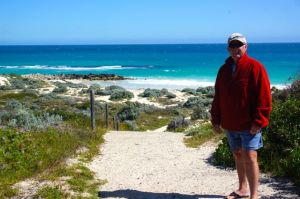
Rod enjoying Yanchep Beach in the cold

Rod enjoying Yanchep Beach in the cold

Friday morning we departed Yanchep and made our way into Perth. Perth is going to be our home for the next two weeks as we have family here and will spend time catching up. We are also bringing the three oldest grandsons across from New Zealand to Perth next weekend so they can travel with us for a time. We are not sure where our stops are going to be but we are sure the boys will not mind as long as they are with us and are in the motorhome.

On a final note in this update, we were very lucky last night and were able to get TV coverage of  election night through TV1 with the help of ABC. Suffice to say we are both ecstatic with the result and feel MMP has come of age in New Zealand. There seems to be a far better understanding of the two types of vote. We are both praying that the 5 percent thresh hold does not change. There are enough loonies there already without adding to the pot.

Categories: Uncategorized | 3 Comments

The Pinnacles Countryside Tour, New Norcia and back to Cervantes

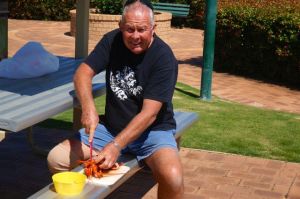
Rod preparing our crayfish lunch at Moora

Rod preparing our crayfish lunch at Moora

On Sunday morning we bid farewell to Steve and Jane as they made their way toward Perth to ready themselves for their return to New Zealand for the summer. We also continued south only to pause 30km later at Cervantes. As we were taking a quick look, we came across a crayfish processing factory with a shop and restaurant attached. For the princely sum of $20 we were able to purchase a reasonably good-sized crayfish. Crayfish in hand, and because it was still so early in the day, we decided to carry on to New Norcia for the night and return to Cervantes on Monday for a couple of nights.

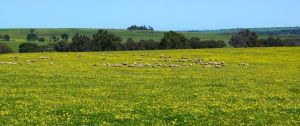
The navigator planned the route and decided we would tour the Pinnacles countryside on the way to New Norcia. It was a stunning journey through wheat fields, wildflowers, canola crops and sheep and cattle country. Again the climate made a huge difference to the vista. The area has had a bit of rain, it is green and the crops are flourishing. We stopped for an hour or so at the township of Moora for a bit of lunch (crayfish) and had a wander around the town then continued on to New Norcia.

The attraction and the fame of New Norcia is that it is the only monastic town in Australia. It is situated 130km north of Perth and on the banks of the Moore River. The New Norcia Benedictine Community is the official title of the group of Roman Catholic monks who have owned and operated the small town of New Norcia since 1847. The monastery has ownership of a little over 8000 hectares surrounding the monastery and the nine monks in residence manage its business. The monastery employs just over 60 staff in a variety of roles and its primary income is derived from cropping and the 10,000 head of sheep on the property.

The stunning wildflowers seen in our drive to New Norcia

The stunning wildflowers seen in our drive to New Norcia

We arrived just in time on Sunday afternoon to undertake a formal tour of the town and the monastery. The town’s building are in a Spanish style of architecture and the historical sites including two old boarding schools, an old mill, a wine press, a hotel (still operating), and the monastery itself. Our tour guide had worked in the town for 40 years so was able to provide us with a great history. We parked up for the night in a field next to the monastery itself.

Monday morning it was back on the road to complete the navigator’s loop of the Pinnacles countryside. We headed southeast to the small country town of GinGin for morning tea then travelled north through Dandaragan and onto the Emu Downs Wind farm for lunch. We are not really into wind farms but just so as you know we were paying attention the wind farm has 48 turbines, produces 80 megawatts, supplies 50,000 homes and only requires 7 people to operate and maintain the farm.

After lunch it was onto Cervantes. The total distance of the navigator’s Pinnacles countryside tour was approximately 250km. While New Norcia was our ‘must see’, the rest of the tour enabled us to visit a number of other small country communities we would not have otherwise seen.

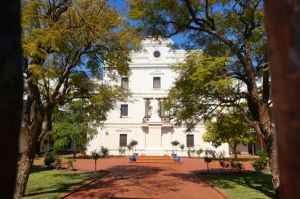
The monastery itself at New Norcia

The monastery itself at New Norcia

Cervantes has been our home for two nights. The village has a population of about 450 and is a laid back fishing settlement about 198 kilometres northwest of Perth. Our park up was the local caravan park approximately 50 metres from the waters edge and with a great view of the towns fishing fleet tied up on buoys about 100 metres from the shore.

We can already attest to the quality of the crayfish and we can now confirm the marinated octopus is delicious. The Indian Ocean Rock Lobster Factory and its associated restaurant “The Lobster Shack” is directly on the beach and they have a broad range of fish products available. They also allow self-guided tours of their factory where one can see how the lobster gets from the ocean to the dinner plate. We have spent a bit of time at the Lobster Shack!!

We are reluctantly departing Cervantes tomorrow and continuing toward Perth. The goal is to make Yanchep by tomorrow night.

Categories: Uncategorized | 2 Comments

Geraldton, Jurien Bay and onto Cervantes

A good shot of the Pink Lake at Port Gregory

A good shot of the Pink Lake at Port Gregory

We know we have said this before but in Australia, and over the matter of a few hundred kilometres, the appearance of the countryside can change considerably. The journey from Kilbarri to Geraldton on Monday further emphasised how the different climatic conditions impacts on this west coast. We went from dry tussock cattle country to relatively green sheep and agricultural country over a very short distance. Being a farmer over here would not be easy.

About half way between Kilbarri and Geraldton we passed the Port Gregory Pink Lake. Like many of its kind in Western Australia, the lake’s pink colouring is created by bacteria which becomes trapped in the salt granules. They say that the lake is best viewed at sundown but we thought the shot we got on Monday morning fairly represented what the lake looked like.

We arrived in Geraldton on Monday in light showers and the weather did really not improve much over the three days we were there. It was certainly not beach weather but it was a nice relaxing stay anyway. The town reminded us very much of Napier and New Plymouth. With a population of about 35,000, the city is home to the Port of Geraldton, a major west coast seaport.

Rod at the HMAS Sydney Memorial at Geraldton

Rod at the HMAS Sydney Memorial at Geraldton

Tuesday was a cleaning and maintenance day on the motorhome and jeep. Not that there was too much wrong with either but just being in one place for three days, having access to water and having good retail support, more of the necessities were available. We celebrated the end of a busy day with a dinner out with Steve and Jane at a local restaurant.

On Wednesday afternoon we made a visit to the memorial for the World War II cruiser HMAS Sydney. It is located near the centre of Geraldton on top of nearby Mount Scott. The memorial recognises the loss of the light cruiser during a sea battle with the German auxiliary cruiser Kormoran off Shark Bay on Australia’s West coast in November 1941. None of the 645 sailors aboard survived the battle. The location of the sunken vessel had been a mystery for 66 years until it was found in March 2008. I cannot help wondering how a ship like that could lose all men. The dome of the memorial is made up of 645 stainless steel seagulls – one for each sailor lost. A granite wall listing the names of the ship’s company who perished is a reminder of the needless destruction of war.

We left Geraldton on Thursday morning and meandered the 200km south to Jurien Bay. As we drove down the coast we hooked a right off the main highway and made a visit to the small coastal town of Port Dennison. Port Denison is a crayfishing town of 3000 residents in the Mid West region of Western Australia. We got chatting to a couple of employees of the local crayfishing factory who informed us the 90 percent of the region’s catch was exported ‘live’ to China. It is a great little earner for the small town. Unfortunately for us we were unable to purchase any of the product from them. Ninety eight percent of the crayfish was exported and with the live export price to China at A$68 per kilo – we decided this was outside our budget.

The beautiful Jurien Bay

The beautiful Jurien Bay

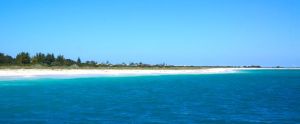
We arrived at Jurien Bay just after lunch on Thursday. The coastal town is in the wheatbelt region of Western Australia and is 220 kilometres north of Perth facing the Indian Ocean. Like Port Dennison, crayfish, also known here as the Western Rock Lobster, are abundant in the area, and the town’s development was influenced by the crayfish industry. The towns multi-million dollar industry regularly exports to to Japan and the United States.

The Jurien Bay weather was very kind to us. We had stunning warm days and fine but cool nights. We were able to get out and about and have a good look around the area. The town is experiencing a house-building boom as its popularity as a holiday destination grows. It is only a short distance from Perth which makes buying a holiday home here an attractive proposition. Very similar to Whangamata, it is claimed that the town’s population more than doubles during the holiday season. We could well imagine that we would spend quite of bit of time here if we lived on this coast.

Road and Steve heading off on an early morning ride at Jurien Bay

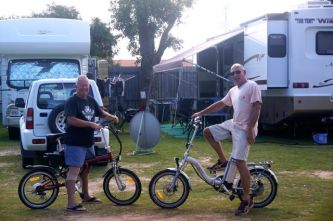
Rod and Steve heading off on an early morning ride at Jurien Bay

The Bay has a brilliant 7.5km cycle and walkway along the waterfront. It is concreted and passes through the main beach area and into the sand hills. One of the standouts on our rides was the reasonably large blue tongue lizards that we were coming across as they lazed on the path soaking up the sunshine. We were doing the decent thing and guiding them back into the sand before they were run over by marauding cyclists.

Tomorrow we continue our journey south as far as Cervantes. It is not that far and we are not sure at this point whether we will overnight there. It will depend on what there is to see. It will be another one of those ‘no plan’ days.

Categories: Uncategorized | 2 Comments

Last Day in Kalbarri

Murchison River Gorge from Hawkes Head in the Kalbarri National Park

Murchison River Gorge from Hawkes Head in the Kalbarri National Park

How will we remember our visit to Kalbarri? That’s easy – it has rained every day we have been here. We are not saying we did not enjoy the visit but the weather made it significantly different to the rest of our journey.

Kalbarri is found at the mouth of the Murchison River on Australia’s Coral Coast. While the coastline would appear to be the primary attraction to visitors, the real attraction for us was the Kalbarri National Park. The National Park covers an area of 186,000 hectares, encircles the town and provides two contrasting settings. East of the town are the inland river gorges and south of the town is magnificent ocean sandstone cliffs, many more than 100 metres above the ocean.

Unfortunately because of the weather, some of the roads in areas we would have liked to visit would have been a driving challenge. Rather than put any of the vehicles at risk, we decided to not to enter those parts of the National Park. We did our best but again, perhaps on another day.

Wildflowers in the Kalbarri National Park

Wildflowers in the Kalbarri National Park

The navigator has been in heaven here. Kalbarri has over 800 species of wildflower and as we drove into the town through the National Park, on both sides of the road the wildflowers were in bloom. On Saturday we took a ride 50km west of Kalbarri and further into the National Park. The area’s sand plains enabled the Navigator to significantly add to her photographic collection of West Australia wildfires.

We were very keen yesterday to try and find a venue here where we could watch the All Black game. It really hit home that rugby is very much a minor sport over here. No hotel, club or resort had the All Black test. It was all AFL. We were able to watch Australia play South Africa on Channel Ten in the motorhome but it was not the same!!

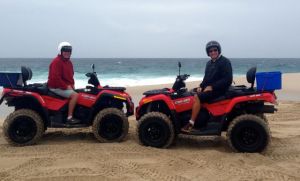
Today was Fathers Day and the captain received a call from all the children. He was very chuffed. In his view there is nothing like knowing your family love you. Everything else pales into insignificance. To top off his day we decided to do a ‘boy’ thing. 20km south of Kalbarri, one of the local coastal cattle stations run quad bike tours. We were picked up at the motorhome and taken to the station. From there it was onto the bike, over the sandhills and onto the beach. We spend a brilliant couple of hours cruising along Wagoe Beach and through the sandhills.

Rod and Steve loving the life - two absent fathers on Fathers Day.

Rod and Steve loving the life – two absent fathers on Fathers Day.

Approximately 22,000 of the world’s humpback whale population pass the Kalbarri coastline around June through to November on their migration each year. We have been keeping an eye along the coast for the past three days but again because of the weather, luck was not on our side. No whales have been sighted. We have not given up – we are driving down the coast tomorrow so will be on alert for the elusive photo shot.

Tomorrow morning it is back on the road to follow the south road through Port Gregory and onto Geraldton. Geraldton is the regional hub of Australia’s Coral Coast and hopefully its size will enable us to get a couple of repair jobs completed ready for the next stage of our journey. Our plan is to stay in Geraldton for three or four days.


Categories: Uncategorized | Leave a comment

Carnarvon, Denham, Monkey Mia, Hamelin Station and to Kalbarri

Our journey to Carnarvon on Sunday was without incident. We say that because most of the highways on this coast are unfenced so there is always the opportunity for cattle, sheep, goats or emu to be roaming the road. Over a distance of 180km on one day of last week, we counted forty-three dead cattle on the side of the road that had been hit by vehicles. No matter the time of day, driving in Australia presents a range of deadly hazards.
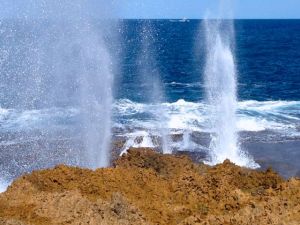
The blowholes at Point Quobba north of Carnarvon

The blowholes at Point Quobba north of Carnarvon

We are finding that the distances between our overnight stops down the west coast are normally in excess of 300km and there is very little to stop for on the way. The road to Carnarvon was no different. The countryside is made up of red earth and scrub but what broke our journey was the constant stopping to photograph wildflowers. Once we have completed the journey to Perth, and have named all the flowers, we will put them up on the blog through SmugMug.

Carnarvon is a coastal town situated approximately 900 kilometres north of Perth and lies at the mouth of the Gascoyne River. The popular Shark Bay world heritage area lies to the south of the town and the Ningaloo Reef lies to the north. One of the first things you notice in driving into the town is the thriving agricultural industry – especially the fruit and vegetable crops. This is in complete contrast to the scrub covered land surrounding the town. Carnarvon also has a thriving cattle, sheep, goat and prawn industry. The town’s is famous for its’ One Mile Jetty. Build in 1897, the jetty is one of the longest in the Southern Hemisphere.

On Monday morning we took the jeep and drove 70km north of Carnarvon to Point Quobba and the blowholes. The blowholes form a natural spectacle as the ocean is forced through sea caves before exploding out through holes in the rocks. During our visit, the seawater being forced through the holes was reaching at least 20 metres in height. A sobering part of our visit to the blowholes was the number of memorial plaques fixed to the rocks in the area where fishermen had drowned while participating in their passion. It stuns us how people are willing to die for a fish!!
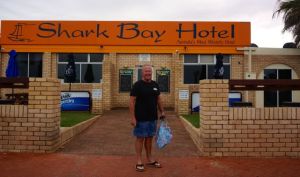
Rod at Denham visiting the most western pub in Australia

Rod at Denham visiting the most western pub in Australia

On Tuesday morning it was back onto the North West Highway and toward Denham. On our way we made a brief stop at Shell Beach. The beach is close to Nanga Bay and 45km southeast of Denham. Shell Beach is so called because of the natural water phenomom that allows the tiny cockle or Coquine to grow. Trillions of tiny shells have accumulated up to 10 metres deep and 1km wide to form a beach made of shells stretching 120km.

Denham consists of a small main street, a population of 600, is the western most town in Australia and is located on the beach on the west coast of the Peron Peninsula 831km north of Perth. It is a stunning part of the coast with an equally stunning beach. We found a great spot at a local park and spent a couple of days in the town. We also caught up with our Waiheke Island travelling companions, Steve and Jane, in Denham. They left us in Broome and had been making their way slowly down the west coast. They are now on the last part of this leg of their Australian journey as they fly home to NZ on 1 October to spend summer on Waiheke.

A dolphin swimming along the beach at Monkey Mia

A dolphin swimming along the beach at Monkey Mia

On Wednesday we took a short drive to Monkey Mia. Monkey Mia is located 23km northeast of Denham and its main attraction is the bottlenose dolphin population that play along its’ shore. Generations of dolphin have been coming close to beach for more than fifty years and while still ‘wild’, they have no hesitation in being within a metre or so from the beach and the people standing in the water. It was a truly brilliant experience and only topped off by a male emu and his chick walking around the beach while we were there. Again the Australian wildlife is fantastic. We would have loved to spend some time in the Francois Peron National Park at the northern tip of the Peron Peninsula but unfortunately a 4WD with a high clearance was considered necessary to make a visit and the little jeep would not have passed the test. Maybe another day.

There was big excitement on Wednesday. There were clouds in the sky and rain. We haven’t had any clouds or rain since our visit to Coober Pedy in very early June this year. It wasn’t a big fall but enough to wash a bit of dust off the motorhome and jeep and to dampen down the roads. By lunchtime it was back to blue sky and no rain.

On Thursday morning we departed the Peninsula and drove 130km south to Hamelin Station where we had decided to stay the night. Hamelin Station was first settled in the 1870’s and consists of 200,000 hectares of grazing land. The station farms 20,000 sheep and 5, 000 goats. We arrived about midday and once set up we unhooked the jeep and made a visit to the Hamelin Pool Telegraph station on the Hamelin Pool Marine Reserve. The Telegraph Station was built in 1884 on the Perth to Roebourne telegraph line. The original building is now a historic museum and well worth a look.

Close by the Telegraph Station is an old shell block quarry. In days past the quarry provided compacted shell blocks for use in building station homesteads, civic buildings and landmark buildings in Denham. The quarry still provides blocks for repairs on existing shell block structures but the block is no longer used on new buildings. Interestingly, the Hamelin Station homestead is made of shell blocks. The compacted shell blocks were cut from the quarry with a chainsaw.

A great shot by the Navigator of the stromatolites underwater at Hamelin Pool Marine Park

A great shot by the Navigator of the stromatolites underwater at Hamelin Pool Marine Park

Have you ever heard of stromatolites? We certainly hadn’t until our visit to Hamelin Pool Marine Reserve. Here goes our explanation and remember we are not scientists. The stromatolites – literally layered rocks – are the oldest form of life on earth dating back 3000 million years. The warm shallow waters at the southern end of Hamelin Pool Marine Reserve favour the growth of microorganisms, particularly cyanobacteria, the simplest single-cell life form known. Stromatolites are the result of cyanobacteria trapping fine sediment and because the cyanobacteria need sunlight to grow, they have the ability to move toward the light thus their growth keep pace with the accumulating sediment. A viewing walkway provided excellent access to stromatolites in the Hamelin Pool area. Take from that what you will!!

This morning we departed Hamelin Station and made our way 270km to Kalbarri. Kalbarri is a coastal town located 592 km north of Perth and is found at the mouth of the Murchison River. There is quite a bit to see and do here so this will be our home for the next three days.

Categories: Uncategorized | 1 Comment

Blog at WordPress.com.